


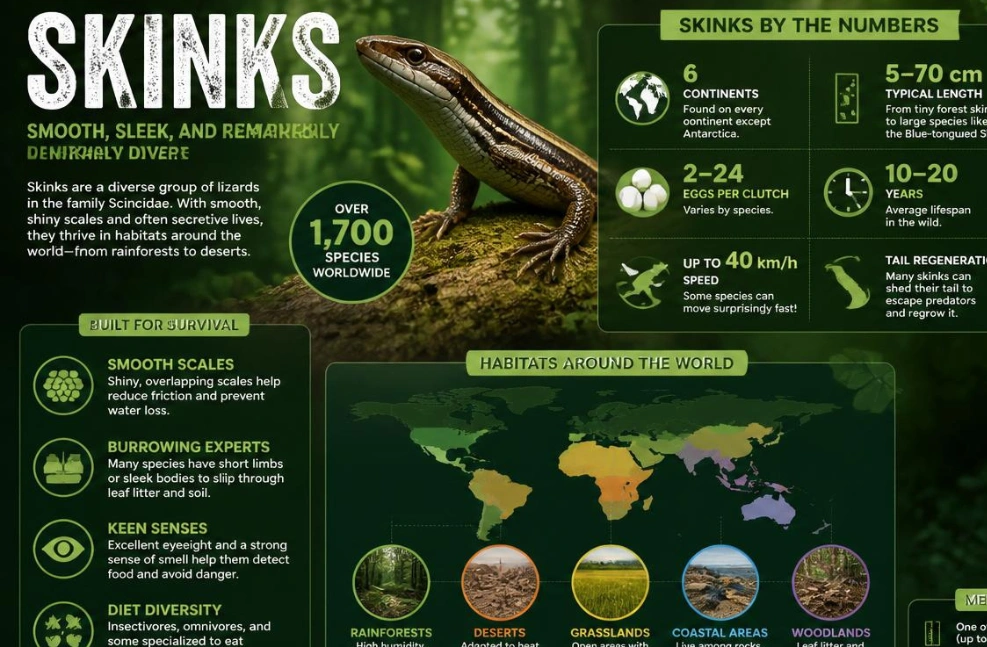
If you are asking, “Are skinks poisonous?“”,” the reassuring answer is no for the species people commonly encounter in the United States. These smooth-scaled lizards do not have a medically significant venomous bite, and their colorful tails are not poisonous stingers. A backyard encounter is usually a wildlife observation rather than an emergency.
Quick answer: Skinks are not considered poisonous or venomous to humans, and their bites do not inject a toxin. The bright blue tail seen on many juvenile North American species is a defense feature, not a poisonous stinger. The more practical concerns involve ordinary bite wounds, reptile-borne germs, and pets swallowing wildlife.
| Key question | What to know |
| Poisonous to people? | Current evidence does not support skink toxicity as a human poisoning hazard. |
| Venomous bite? | No established venomous bite occurs in the skink family. |
| Is the blue tail poisonous? | No. Juvenile blue tails are not stingers or evidence of venom. |
| Can one bite? | Yes, especially if grabbed, but common U.S. species are considered harmless to people. |
| Can pets get sick after eating one? | Illness can occur after eating wildlife, although poisoning is not the main established concern. |
| Main hygiene concern | Reptiles can carry Salmonella even when they appear healthy. |
Key Takeaways
- Skinks do not have the kind of venom-delivery system associated with dangerous venomous reptiles.
- A bright blue tail does not mean the animal is poisonous, although the color may help distract predators.
- A defensive bite can hurt or break skin, so wash any wound promptly and watch for infection.
- Dogs and cats should still be discouraged from eating wild reptiles because ingestion can expose them to germs or cause digestive problems.
Are Skinks Poisonous or Venomous to Humans?
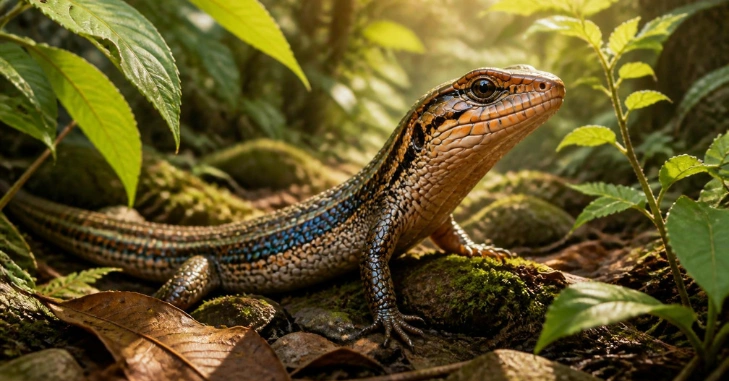
Scientific evidence does not support the idea that members of the skink family have toxic venom capable of causing human envenoming. A published review of Scincidae found no convincing evidence of venom proteins or a toxin-delivery system that would make these lizards medically dangerous. Wildlife agencies in the United States likewise describe common species as harmless or nonvenomous.
The distinction between poison and venom helps explain the confusion. Venom is delivered into another animal through structures such as fangs or stingers, while poison causes harm through ingestion, absorption, or another type of exposure. For the North American species commonly seen around homes, neither label accurately describes the normal risk to people.
Why Do Blue-Tailed Skinks Have a Poisonous Reputation?
Juvenile five-lined and broad-headed species can have dark bodies, pale stripes, and striking cobalt-blue tails. That bright color looks like a warning signal, which has helped fuel folklore claiming that the tail contains poison or can sting. State wildlife guidance specifically rejects that claim and explains that the tail itself is not venomous or poisonous.
The blue tail has a defensive purpose instead. When a predator attacks, the conspicuous moving tail can draw attention away from the lizard’s head and body, and many lizards can shed a tail while escaping. UF/IFAS Extension also describes the blue coloration as a predator-distraction feature in young five-lined species.
What Happens If a Skink Bites You?
A skink may bite when someone grabs, corners, or restrains it, particularly if the animal is large. Missouri conservation officials note that a broad-headed skink can deliver a painful defensive bite, although it seldom breaks human skin and is not considered dangerous. The bite is a mechanical injury rather than a venom injection.
If the skin does break, treat it as you would another minor animal bite rather than a poisoning emergency. The CDC advises washing reptile bites immediately with warm, soapy water and seeking medical attention for serious wounds, increasing redness, swelling, warmth, or pain. Medical advice is also sensible if your tetanus vaccination may not be current.
Can Skinks Make Dogs or Cats Sick?
Pet owners often worry because dogs and cats chase small reptiles in yards. Current veterinary guidance does not generally classify common skink species as poisonous to dogs or cats, although eating a wild animal can still lead to vomiting, diarrhea, irritation, or other illness. A pet that only sees or briefly touches a healthy lizard is unlikely to have a poisoning problem.
Claims that blue-tailed varieties contain a special neurological toxin have circulated for years, especially in parts of the southeastern United States. Strong scientific documentation for that specific poisoning claim is lacking, so sudden weakness, vomiting, loss of balance, or unusual behavior should not automatically be blamed on a toxin. Contact a veterinarian if a pet becomes ill after catching or swallowing wildlife rather than trying to diagnose the cause at home.
For more animal-related reading, NewsPrend readers can browse the site’s Pets section for additional pet and household guides.
Reptile Germs Are a More Practical Concern
The most useful safety lesson has little to do with poison. The CDC’s guidance on reptiles and amphibians states that they can carry Salmonella in their digestive systems while looking clean and healthy, and the bacteria can spread to their bodies or surroundings. People can become sick after handling a reptile or contaminated equipment and then transferring those germs to their mouths or food.
Handwashing is therefore sensible after touching any reptile, including a pet skink. The CDC recommends extra caution for children younger than five, adults 65 or older, and people with weakened immune systems because those groups face a higher risk from reptile-associated germs. Wild animals should also stay away from food preparation areas, dishes, and kitchen surfaces.
Should You Remove a Skink From Your Yard or Home?
Skinks often live around leaf litter, logs, rocks, wood piles, gardens, and other places where small invertebrates are available. They feed on insects, spiders, and similar prey, so seeing one outdoors does not mean your property is dangerous. The simplest response is usually to leave the animal alone and give it an escape route.
If one enters the house, avoid grabbing it by hand or pulling its tail. Open a nearby exit when practical, keep pets away, or gently guide the animal toward a container without squeezing it. Readers working on entry points, screens, or other household fixes can also explore NewsPrend’s Home Improvement guides.
The Bottom Line for U.S. Homes
A skink in the yard is usually a harmless native visitor rather than a poisonous pest. Give the animal space, keep dogs and cats from eating it, and wash your hands after direct handling. Those simple precautions address the realistic risks without treating a useful little reptile as a threat.
If you encounter another unfamiliar animal around your property, identify it before deciding whether removal is necessary. You can continue browsing practical household, pet, and general-interest information from the NewsPrend home page. When a bite causes a serious wound or a pet becomes ill after eating wildlife, contact the appropriate medical or veterinary professional.
Frequently Asked Questions
Are skinks poisonous to humans?
No established evidence shows that common North American species pose a poisonous or venomous threat to humans. Their bites are defensive and do not function like a venomous snake bite. The greater concerns are a possible small wound and normal reptile hygiene.
Are blue-tailed skinks poisonous?
The bright blue tail seen on young five-lined and related species is not a poisonous stinger. Wildlife agencies describe the coloration as a defensive feature that can redirect a predator’s attention toward an expendable tail. The blue color should not be treated as evidence that the animal is toxic.
Can skinks hurt dogs or cats?
A wild lizard can still cause problems if a pet catches or swallows it, even without a proven toxin. Digestive upset, germs, parasites, choking, or an unrelated illness can produce symptoms after the encounter. Call your veterinarian if your dog or cat develops vomiting, diarrhea, weakness, unusual behavior, or persistent loss of appetite.
Do skinks carry Salmonella?
Reptiles as a group can carry Salmonella while appearing healthy, so sensible hygiene applies after handling one. Wash your hands with soap and running water, and avoid touching food until your hands are clean. Families with young children or medically vulnerable people should follow the CDC’s added precautions for reptile contact.
